|
 |
|
|
| |
| You are here: Home » Products » PolyTrans-for-CINEMA 4D |
|



Support: 905-672-9328 Copyright © 2026 Okino Toronto, Ontario, Canada. |
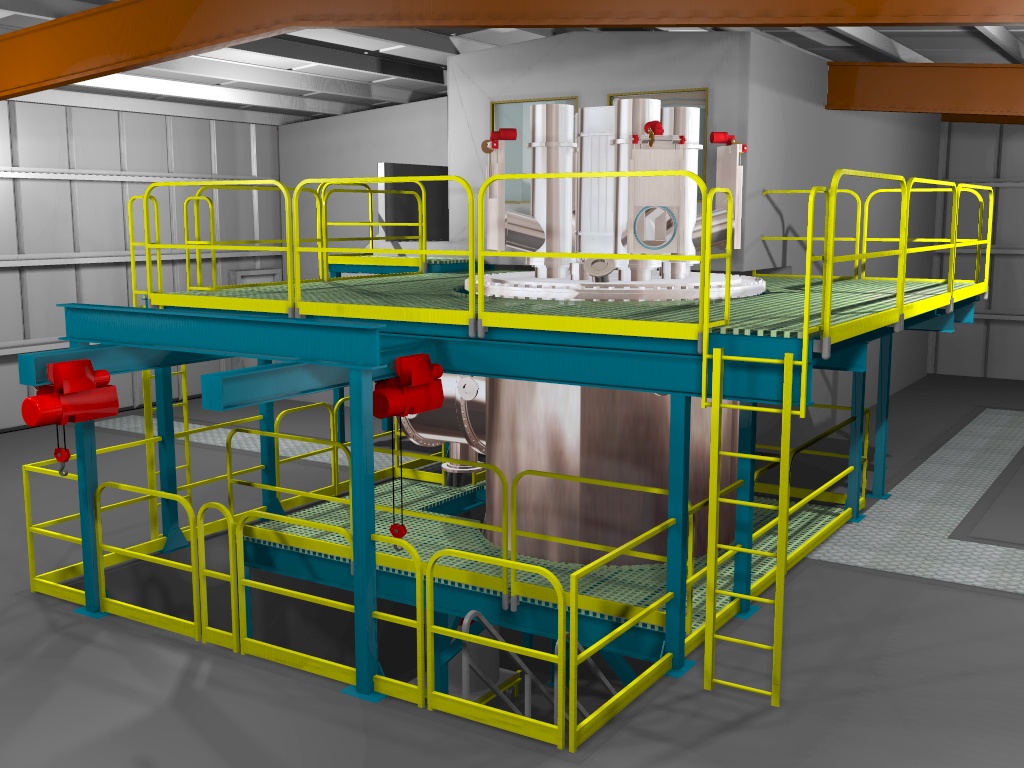
| Mechanical Study Mock-Up |
This is an excellent example of how complex images with the look of "radiosity" can be rendered quickly and efficiently with NuGraf.
The scene was created by Mr. Jim Mattison (Verity Grafix) in AutoCAD using solids then exported to NuGraf via DXF for rendering. To simulate the soft shadows and diffuse inter-reflections typical of a radiosity rendering Mr. Mattison added 18 light sources to the scene (16 point lights and 2 spot lights) of which 12 of the point lights and the 2 spot lights casted shadows. NuGraf's "shadow map" shadow casting algorithm was used to create the nice soft shadows quickly and in a conservative amount of memory (all shadow maps were computed at a resolution of 512x512 pixels).
Copyrights: The image is owned and copyrighted by Integrated Environmental Technologies (IET) and Verity Grafix.